
20 important questions before accepting new tenants
Complete list of 20 essential questions to ask before accepting new tenants. Avoid problematic tenants and protect your rental property with proper screening.
Accepting the wrong tenant can become a nightmare for any landlord. From those who don’t pay rent, damage facilities, to causing problems with other tenants—one wrong decision can result in losses of millions.
The good news is that most of these problems can be prevented with proper screening upfront. By asking the right questions, you can get a clear picture of prospective tenants before handing over the room keys.
In this article, you’ll find 20 important questions that should be asked to every prospective tenant. These questions have been proven to help hundreds of landlords avoid problematic tenants.
Why is tenant screening important?
Before we get to the list of questions, let’s understand why this screening process is so crucial.
Protecting your property
Your rental property is a significant investment. Irresponsible tenants can cause damage that exceeds the deposit amount. With proper screening, you can identify prospective tenants who will take care of the room as if it were their own.
Keeping cash flow steady
Tenants who pay late or don’t pay at all will disrupt your rental business finances. The right screening questions can help assess the payment ability and habits of prospective tenants.
Creating a harmonious environment
One problematic tenant can affect the comfort of all other residents. As a result, good tenants are the ones who leave, while problems remain. Screening helps ensure every new tenant fits with the existing rental environment.
Avoiding legal issues
Tenants involved in illegal activities can bring problems to your property. From police inspections to neighbor complaints, the risks aren’t worth it. The right questions can help detect red flags early on.
Screening question categories
For easier reference, we’ve divided these 20 questions into 5 categories:
- Identity and background — Who is this prospective tenant really?
- Employment and finances — Can they pay rent consistently?
- Previous rental history — What’s their track record as a tenant?
- Habits and lifestyle — Do they fit with the property rules?
- Needs and expectations — What are they looking for and how long will they stay?
Let’s discuss each one.
Identity and background questions
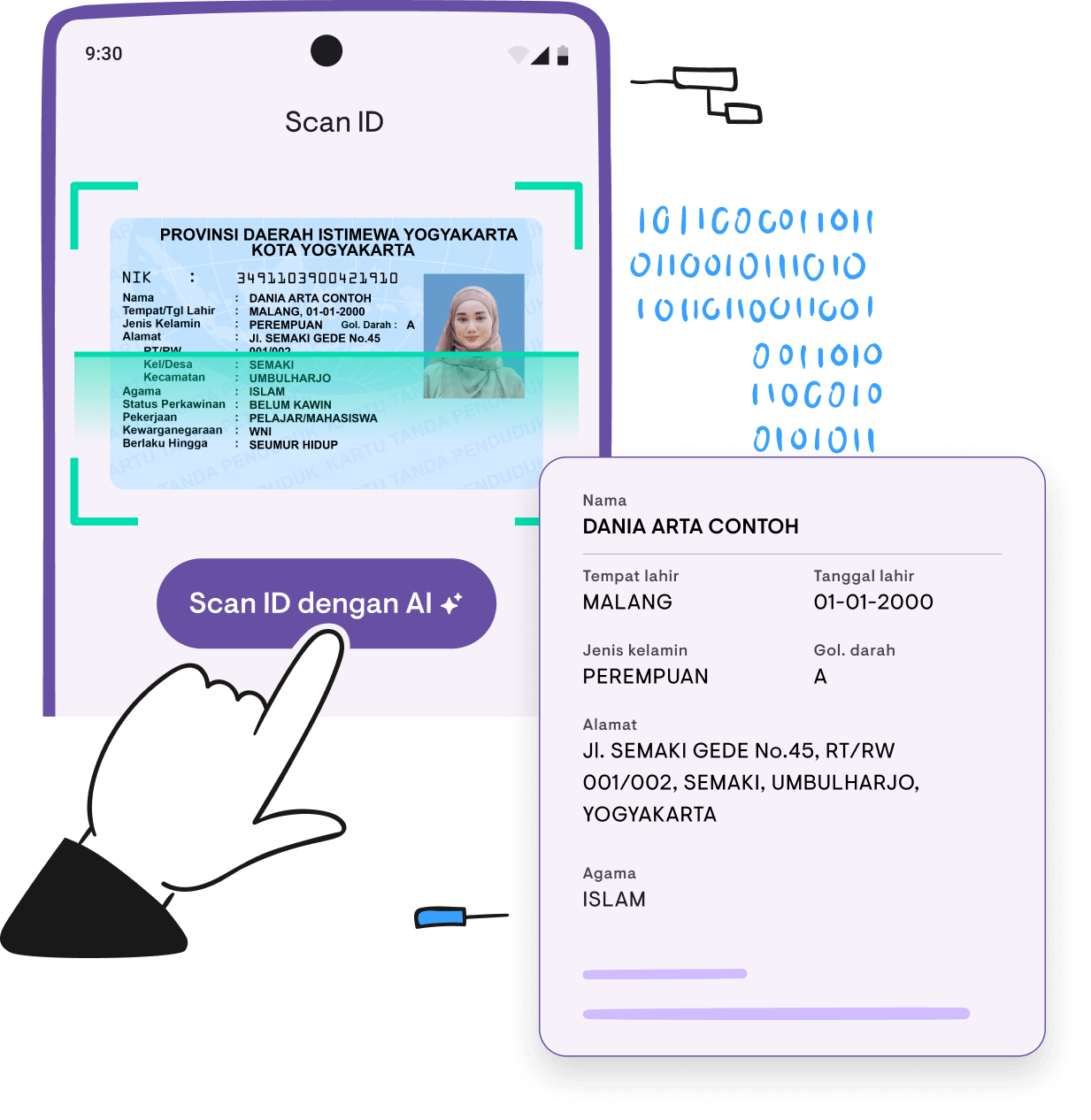
1. May I see your original ID card?
This is the most basic question yet often overlooked. Many landlords only request a photo of the ID without verifying it with the actual person.
Why it’s important:
- Ensures identity matches the document
- Prevents identity fraud
- Basis for rental contract documentation
Tips: Use an app with automatic ID scanning to speed up the process and store data securely. With Kamaru, you can scan IDs in seconds and the data is immediately saved to the tenant profile.
2. Do you have an emergency contact we can reach?
Every tenant should have at least one emergency contact—usually family or close friends who can be reached in urgent situations.
Information to record:
- Emergency contact’s full name
- Relationship to tenant
- Active phone number
- Address (optional but useful)
Why it’s important: If something happens to the tenant—illness, accident, or even death—you need to be able to contact their family. This is also useful if a tenant disappears without notice.
3. Where are you originally from?
This question isn’t for discrimination, but to better understand the context of the prospective tenant.
Additional information to explore:
- Are they new to this city?
- What brought them here (study, work, etc.)?
- Do they have family or acquaintances nearby?
Prospective tenants who are relocating for the first time may need more guidance about the surrounding area, while those who have been in the city for a while are usually more independent.
4. Who will be living in this room?
Make sure you know exactly who will occupy the room. Is it just one person? A couple? With children?
What to clarify:
- Number of occupants
- Relationship between occupants (if more than one)
- Whether it matches the type of room being rented
Red flag: Prospective tenants who answer hesitantly or inconsistently about who will be staying. This could indicate the room will be used for other purposes or there will be additional unreported occupants.
Employment and financial questions
5. What is your main job or activity?
This is a key question to assess the financial capability of prospective tenants.
Common answers to explore:
- Employee — At which company? How long have they been there?
- Student — Where do they study? What semester? Who’s funding them?
- Entrepreneur — What business? How long has it been running?
- Freelancer — What field? What’s their income pattern?
Tips: For students, also ask who will be paying the rent. Usually it’s parents, and you may need the parents’ contact as a guarantor.
6. What is your monthly income?
This question may feel sensitive, but it’s important to ensure the prospective tenant can pay rent consistently.
Rule of thumb: Ideally, rent should not exceed 30% of monthly income. If the rent is $300/month, the prospective tenant’s income should be at least $1,000/month.
How to ask politely:
“To make sure this room fits your budget, may I know your approximate monthly income? This is to ensure rent payments won’t be a burden.”
7. Can you show proof of employment or income?
For additional verification, request supporting documents:
For employees:
- Recent pay stub
- Employment certificate
- Employee ID
For students:
- Active student ID
- Tuition payment proof
- Parent contact
For entrepreneurs/freelancers:
- Bank statements from last 3 months
- Work portfolio
- Client references
Tips: Not all landlords do this verification, but for properties with high rent or for long-term tenants, it’s highly recommended.
8. How will you pay rent?
Understand the prospective tenant’s payment preferences from the start.
What to ask:
- Bank transfer or cash?
- Which bank do they use?
- Can they pay on time at a specific date?
Tips: The easier the payment process, the less likely delays will occur. If you use a management system like Kamaru, you can track all contracts and payment schedules in one place.

Previous rental history questions
9. Where did you live before?
Previous residence history provides insight into the stability and habits of prospective tenants.
Information to record:
- Full address
- Type of housing (boarding house, rental, family home)
- Length of stay
Red flag: Moving too frequently (less than 6 months per place) without clear reasons. This could indicate problems with previous landlords or residents.
10. Why are you moving from your previous place?
This question often reveals important information that wouldn’t be shared voluntarily.
Reasonable reasons:
- Location too far from new office/campus
- Facilities didn’t meet needs
- Contract ended
- Need a bigger/smaller room
- Price increase beyond budget
Reasons to be wary of:
- Conflict with previous landlord
- Problems with other residents
- “Evicted” (ask the reason carefully)
How to dig deeper:
“Were there any issues with your previous place? It’s okay if there were—I just want to make sure this place is right for you.”
11. May I contact your previous landlord?
References from previous landlords are the most valuable source of information about prospective tenants.
What to ask the previous landlord:
- Did they always pay on time?
- What was the room condition when they left?
- Were there any problems during their stay?
- Would you accept this person again?
Tips: The prospective tenant’s reaction to this request can also be an indicator. If they object without a clear reason, it could be a red flag.
12. Have you ever been evicted from a previous rental?
This direct question may feel confrontational, but it’s important to ask.
How to ask politely:
“Sorry if this question is uncomfortable, but for our procedure: have there ever been issues with previous rental contracts that caused you to move out early?”
If the answer is yes: Listen to the reason. Sometimes there are situations truly beyond the tenant’s control, like the landlord selling the property or force majeure. But if the reason is related to payment or behavior, consider carefully.
Habits and lifestyle questions
13. Do you smoke?
This is one of the most important lifestyle questions, especially if your property has a no-smoking policy.
What to clarify:
- Are they an active smoker?
- If yes, are they willing to smoke outside the room?
- Do they understand the consequences of violating the rules?
Tips: Cigarette smell that seeps into a room is very difficult to remove and can affect the room’s value for future tenants. Explain the rules firmly from the start.
14. Do you have any pets?
Many rental properties don’t allow pets due to potential damage, odors, and allergies of other residents.
What to ask:
- Type and size of pet
- Is the pet vaccinated and well-maintained?
- Arrangements if the property doesn’t allow pets
Tips: If your property allows pets, consider implementing an additional deposit specifically for tenants with pets.
15. What is your daily schedule like?
This question helps assess whether the prospective tenant’s habits match the property rules and culture.
Useful information:
- Work/school departure and return times
- Do they often work night shifts?
- Do they often go out at night or on weekends?
Why it’s important: Tenants who work night shifts may sleep during the day and need quiet during those hours. Tenants who often go out at night may be bothered by strict curfew rules.
16. Do you often have guests over?
Guest policies are one of the most common sources of conflict in rental properties.
What to clarify:
- How often do they plan to have guests?
- Will any guests be staying overnight?
- Do they understand the applicable guest rules?
Tips: Explain guest rules in detail from the start:
- Allowed visiting hours
- Overnight guest procedures (if permitted)
- Additional fees (if any)
- Consequences of violations
17. What are your cleanliness habits?
This question is important especially for properties with shared facilities like kitchens and bathrooms.
How to ask:
“This property has a shared kitchen. What are your usual habits after cooking? Do you clean up right away or often postpone it?”
Red flag: Prospective tenants who appear uncomfortable or defensive with this question. Cleanliness habits are usually consistent—if they’re not tidy during the interview, they’ll likely be the same when living there.
Needs and expectations questions
18. How long do you plan to stay?
Clear rental duration helps business planning and avoids sudden room vacancies.
Information to confirm:
- Minimum estimated duration
- Is there a possibility of extension?
- What could cause early departure?
Tips: For long-term tenants (1 year or more), consider offering a discount as an incentive. This benefits both parties.
19. What are you looking for in a rental?
This open-ended question helps ensure the prospective tenant’s expectations match what you’re offering.
Answers to pay attention to:
- Specific facilities they’re looking for
- Expected comfort level
- Main priority (location, price, or facilities)
Mismatch to avoid: If a prospective tenant expects hotel facilities at budget rental prices, it’s better to be honest from the start that those expectations may not be met.
20. Do you have any questions about the rules or facilities?
This closing question provides an opportunity for two-way clarification.
Benefits of this question:
- Ensures the prospective tenant understands all rules
- Identifies concerns that haven’t been discussed
- Shows openness to communication
Tips: Prepare written property rules that can be given to prospective tenants. Ask them to read and confirm understanding before signing the contract.
Tenant screening checklist
To simplify the screening process, here’s a checklist you can use:
Documents to collect
- Original ID (photographed or scanned)
- Emergency contact number
- Proof of employment/income (optional but recommended)
- Previous landlord contact (for verification)
Questions to ask
- Identity and background (questions 1-4)
- Employment and finances (questions 5-8)
- Previous rental history (questions 9-12)
- Habits and lifestyle (questions 13-17)
- Needs and expectations (questions 18-20)
Red flags to watch for
- Refuses to show original ID
- Cannot provide emergency contact
- Unstable rental history
- Refuses verification with previous landlord
- Inconsistent answers
- Appears to be hiding something
Tips for effective screening
Do it in person
If possible, conduct screening face-to-face. You can get a lot of information from body language, way of speaking, and overall impression that can’t be obtained from chat or phone calls.
Trust your instincts
If something feels off—even if you can’t explain it—trust your instincts. It’s better to decline a “suspicious” prospective tenant than to face problems later.
Document thoroughly
Record all information obtained from screening. Store it digitally for easy access. Apps like Kamaru help you store all tenant data in one secure place.
Be consistent with all prospective tenants
Apply the same screening process for all prospective tenants. This helps make objective decisions and avoids discrimination.
Don’t rush
Even if a room has been empty for several weeks, don’t rush to accept a tenant who doesn’t meet criteria. The cost of a problematic tenant is far greater than the cost of temporary vacancy.
FAQ
Is it okay to reject prospective tenants?
Yes, as a property owner you have the right to choose who will stay. However, rejection should be based on valid reasons such as financial capability, rental history, or incompatibility with property rules—not based on race, religion, or other discrimination.
What if a prospective tenant refuses to answer certain questions?
That’s a red flag. Honest prospective tenants won’t mind answering reasonable screening questions. If they refuse without a clear reason, it’s best to reconsider accepting them.
Should I request a deposit before screening is complete?
No. The screening process should be completed before accepting any deposit or down payment. This protects both parties from undesirable situations.
How long should the screening process ideally take?
For basic screening (ID, emergency contact, basic questions), it can be done in 15-30 minutes. For additional verification (contacting previous landlord, checking documents), it may take 1-2 business days.
Do college students need different screening?
Yes. For students, focus screening on who will be paying (usually parents), verify active student status, and get parents’ contact as guarantors. Many students are good tenants as long as there’s a clear guarantor.
How do I store screening results safely?
Store data digitally, not just on paper or phone gallery that can get lost. Kamaru stores all tenant data including ID photos securely, and can be accessed from any phone whenever you need it.
Conclusion
Tenant screening may feel troublesome at first, but the time you invest will pay off many times over. With these 20 questions, you can identify prospective tenants who truly fit and avoid those who could be problematic.
Remember: it’s better to have a room empty for a few weeks than occupied by the wrong tenant for months. One right decision at the start can save significant time, money, and energy down the road.
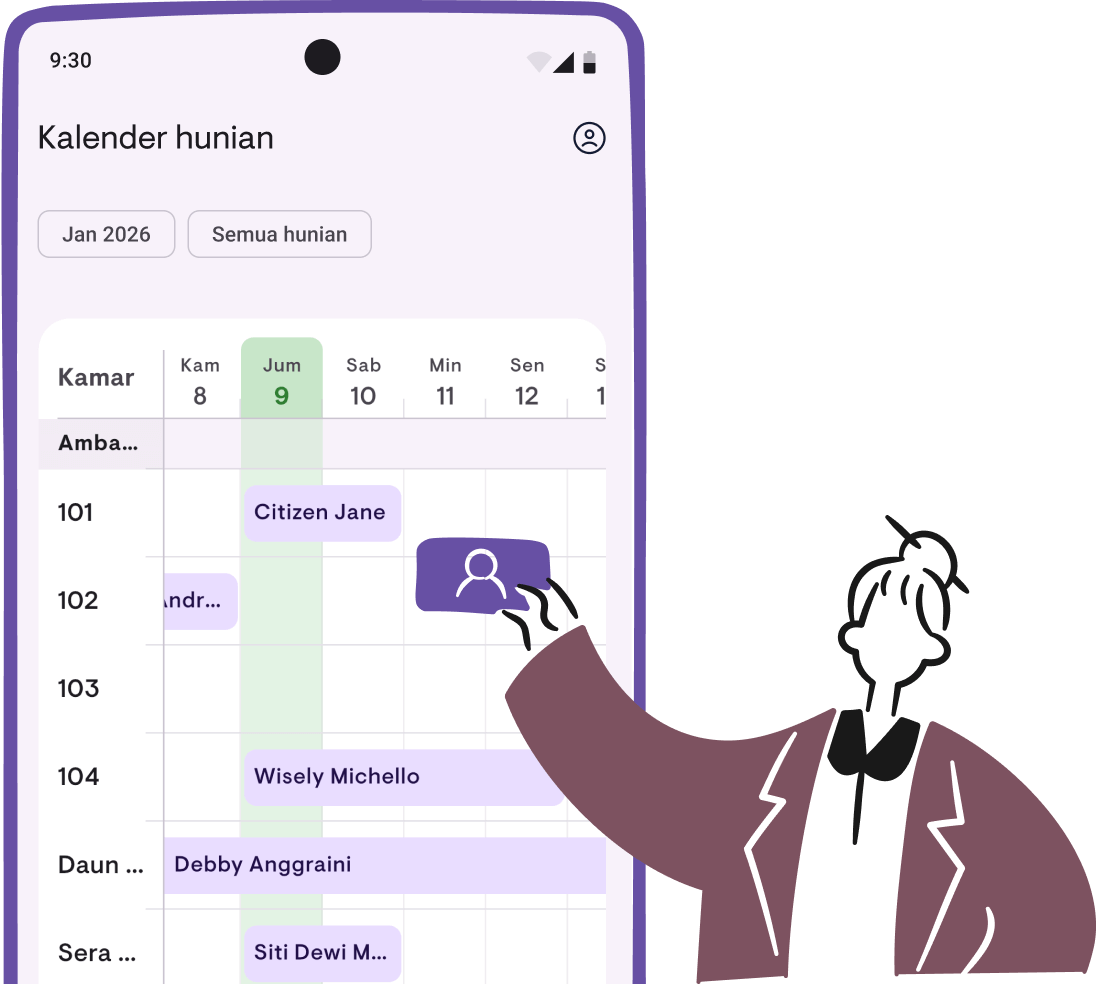
Ready to manage tenants more professionally? Try Kamaru free today. With automatic ID scanning, contract management, and occupancy calendar, all tenant data is neatly stored in one place.
Related articles
Have questions or feedback? We'd love to hear from you. Email us.

Start managing for free today
Join other landlords who are already using Kamaru to manage their properties.

