
Complete Guide to Managing Boarding House with Kamaru 2026
New to being a boarding house landlord? This complete guide will help you from zero to pro—from finding tenants to managing rent payments with Kamaru.
Being a boarding house landlord for the first time can feel overwhelming. From managing tenants, tracking payments, handling ID documents, to maintenance—everything takes extra time and effort. Many first-time landlords end up overwhelmed and make mistakes that could have been avoided.
The good news is, with the right system, all of this becomes much easier. In this guide, you’ll learn how to manage your boarding house from beginner to pro—from preparation, daily operations, to tips for running a smoother rental business.
Use Kamaru app free to start managing your boarding house in a more organized way from day one.
Why Good Boarding House Management Matters
Before diving into the how-to, it’s important to understand why proper boarding house management is crucial for your business success.
1. Stable passive income
A well-managed boarding house provides consistent passive income. When the payment system is clear and tenants know when to pay, you don’t need to chase payments every month. Cash flow becomes more predictable, and you can plan your finances better.
2. Reduced stress and admin time
Without a clear system, you’ll spend hours every month on administrative tasks. Checking who’s paid, who hasn’t, when contracts expire—all of this eats up time when done manually. A good system can save 10+ hours per month.
3. Preventing conflicts with tenants
Many conflicts between landlords and tenants arise from miscommunication or lack of clear records. With proper documentation, you have evidence if disputes occur. Clear rules from the start also align expectations for both parties.
4. Increasing property value
Professionally managed boarding house properties tend to be better maintained. Satisfied tenants take care of the property. Regular maintenance also prevents small issues from becoming expensive problems.
5. Building a good reputation
In the digital age, reputation is everything. Satisfied tenants will recommend your boarding house to their friends. Word of mouth remains the most effective way to get quality new tenants.
6. Business scalability
When you have a solid system, scaling your business becomes much easier. Want to add a second or third property? Just duplicate your existing system. Without a system, each new property significantly increases your workload.
Preparation Before Starting
Before accepting your first tenant, there are several things you need to prepare.
Required documents
Make sure you have these documents:
- Certificate of ownership or proof of lease (if you’re subleasing)
- Building permit if required
- Lease agreement template that’s clear and complete
- Inventory list for each room
- Written house rules
Keep all these documents in a safe and easily accessible place. Kamaru can help you organize these important documents digitally.
Setting rental prices
Research rental prices in your area before setting your rates. Consider:
- Location - Near campus, office, or public transportation?
- Facilities - AC, en-suite bathroom, WiFi, parking?
- Building condition - New, renovated, or standard?
- Competitors - What do similar boarding house properties charge nearby?
Prices too high make your boarding house empty. Prices too low make you lose money. Find the sweet spot that’s competitive yet profitable.
Creating house rules
Clear rules from the start prevent future problems. Things to regulate:
- Guest visiting hours - Until what time are guests allowed?
- Smoking policy - Allowed in rooms or certain areas?
- Pets - Allowed or not?
- Noise - Are there quiet hours?
- Payment - Due date, payment methods, late fees
- Repairs and maintenance - Who covers what?
Write these rules clearly and ensure tenants read and agree before moving in.
Room preparation
Before tenants move in, ensure rooms are in optimal condition:
- Clean - Deep cleaning before new tenants
- Functional - Check all facilities (AC, lights, outlets, etc.)
- Documented - Photo room condition before tenant moves in
- Complete - Inventory matches what was promised
Documenting room condition is important for reference if there are damage claims later.
Step-by-Step Boarding House Management with Kamaru
Now let’s get to the practical part. Here are the daily boarding house management steps you can implement.
Step 1: Create a property recording system
The first step is to create complete records of your property. This includes:
- Property data - Address, number of rooms, common facilities
- Per-room data - Room number, facilities, rental price
In Kamaru, you can create a complete property profile in minutes. Just input the data, and everything is stored neatly in one app.
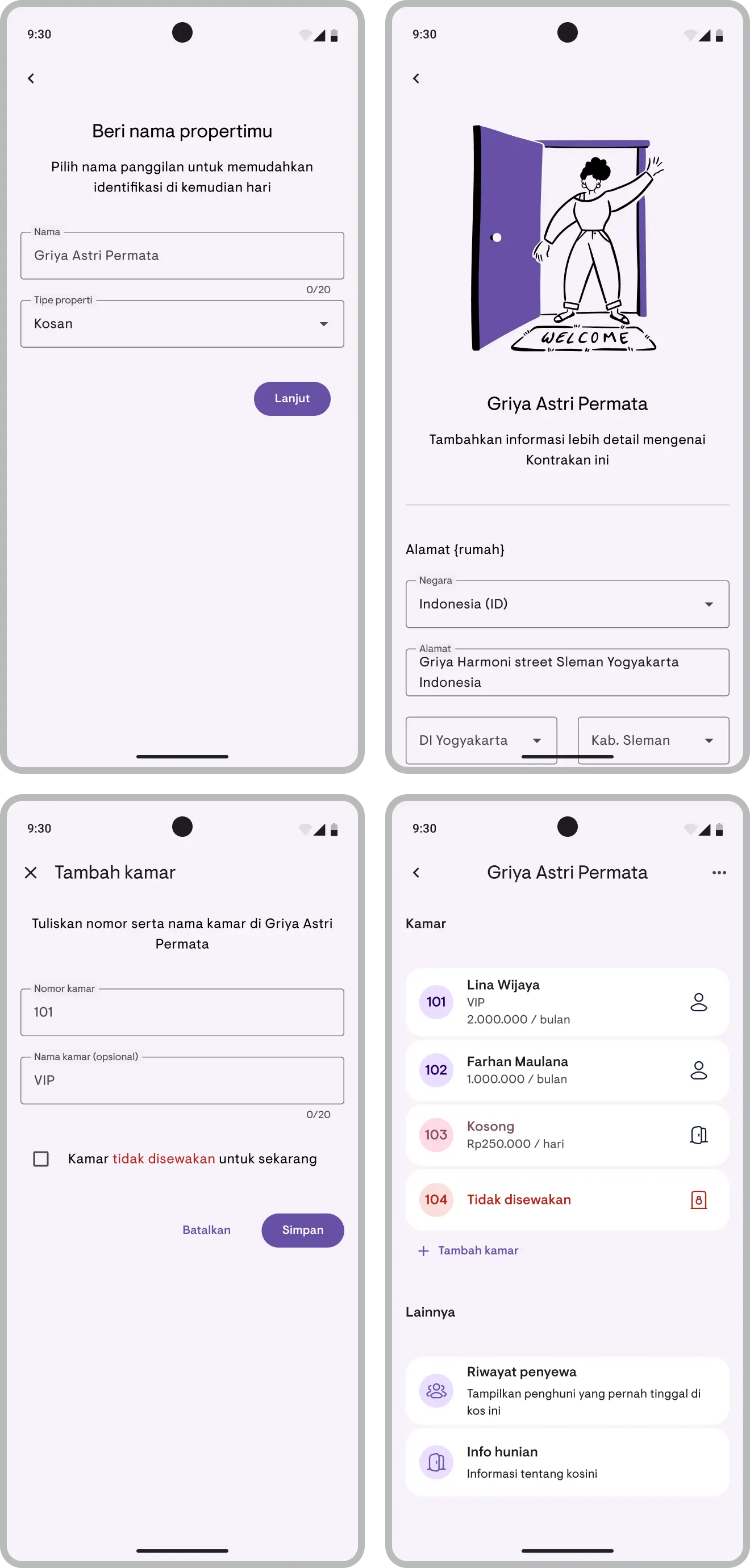
With a good recording system, you won’t be confused checking property details anymore.
Step 2: Tenant registration process
When prospective tenants come, an efficient registration process creates a good first impression. Here’s the flow:
- Initial screening - Ask about work, reason for moving, etc.
- Show the room - Give a tour and explain facilities
- Explain rules - Ensure prospects understand and agree
- Collect documents - ID, photo, emergency contact
- Sign agreement - Both parties have copies
- Receive deposit and first rent - Record clearly
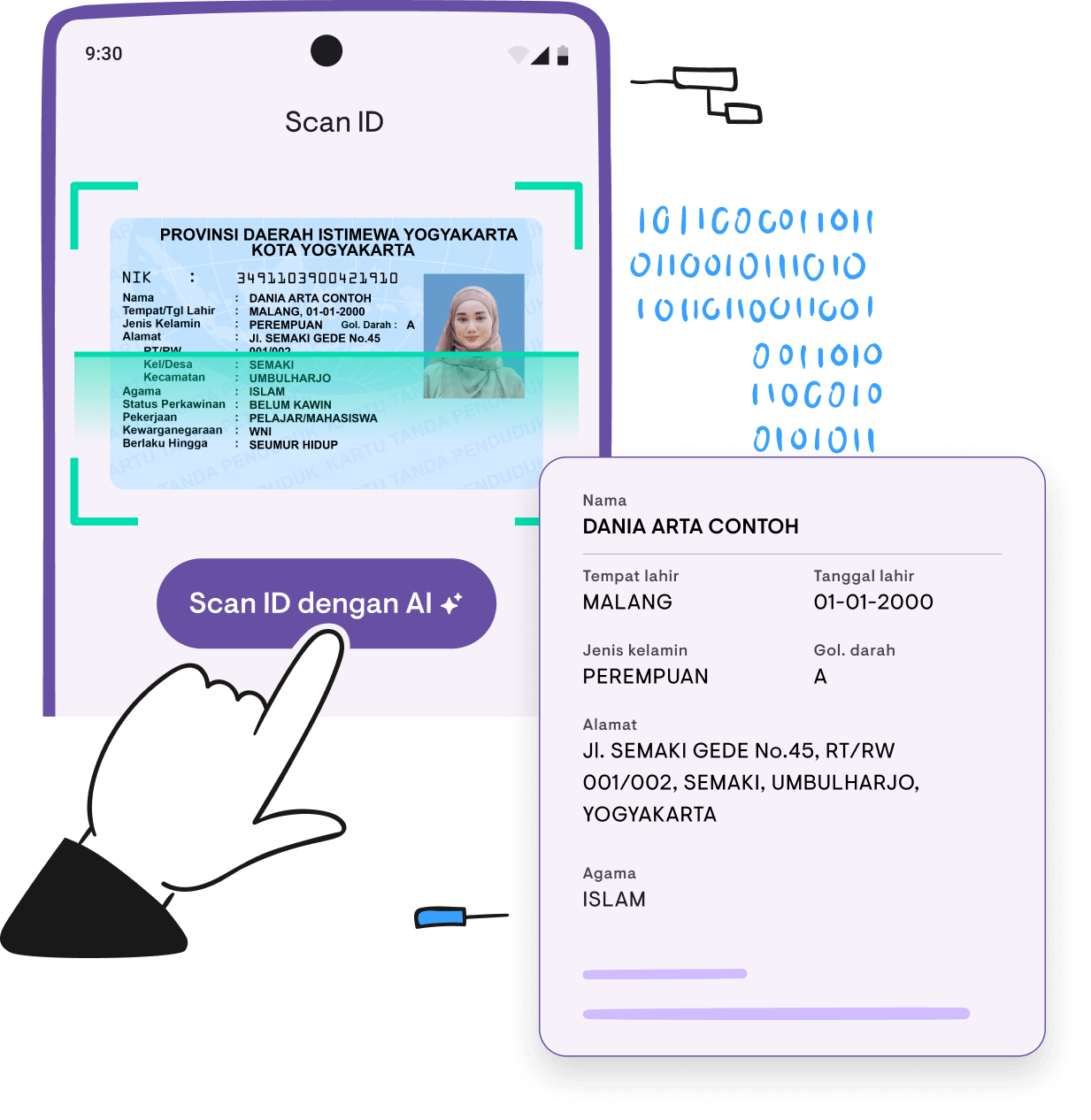
Kamaru has an automatic ID scanning feature that can extract data from ID photos. No manual typing needed—scan, verify, done. Tenant data is stored directly in the system.
Step 3: Set up rent payment system
A clear payment system is key to healthy cash flow. Determine:
- Due date - What day of the month?
- Payment methods - Bank transfer, e-wallet, cash?
- Grace period - How many days tolerance for late payment?
- Late fees - How much and how is it calculated?
Communicate all of this clearly to tenants from the start. Send reminders a few days before the due date so they’re prepared.
Kamaru is developing Premium features where you can set automatic reminders and track payment status for each tenant. Soon, the app will show who’s paid and who hasn’t.
Step 4: Manage tenant documents
Each tenant has documents that need to be stored:
- ID - Official identity
- Photo - For identification
- Lease agreement - Proof of agreement
- Payment receipts - Deposit, monthly rent
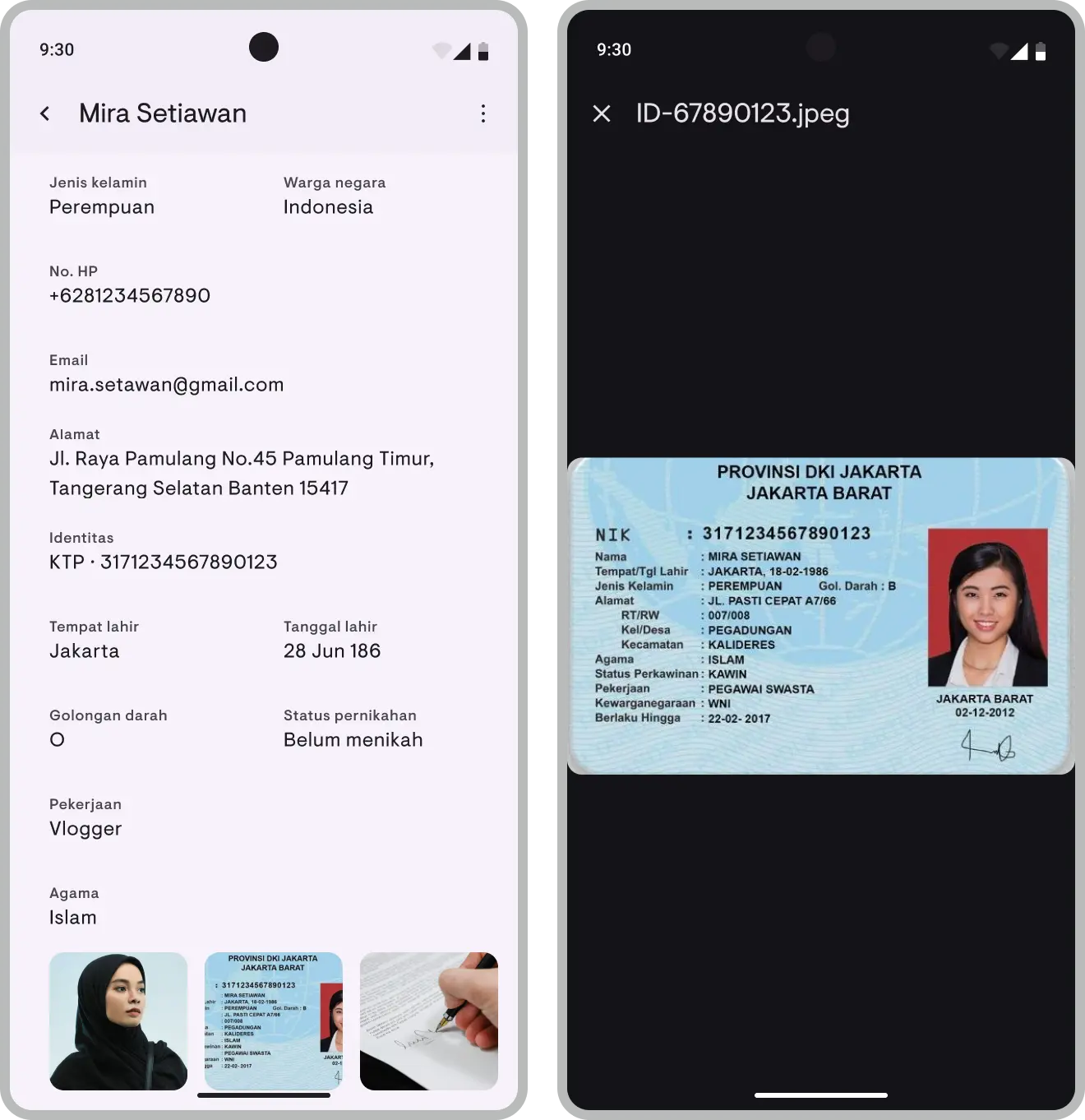
Don’t store important documents only on paper. Take photos or scan digitally and save as backup. With Kamaru, all photos and additional documents for tenants are stored in their profile—easy to find whenever needed.
Step 5: Monitor payments and arrears
This is the part that often frustrates boarding house landlords. Who’s paid this month? Who’s behind? What’s the total outstanding?
Without a system, you have to check one by one. With spreadsheets, you still need to update manually. With an app like Kamaru, soon you’ll be able to monitor all this automatically.
Tips for handling arrears:
- Remind at D-3 - Remind before due date
- Follow up at D+1 - Ask directly if late
- Good communication - Sometimes tenants just forget or have temporary issues
- Firm but fair - Apply agreed-upon rules
- Documentation - Record all communication
Don’t let arrears pile up. The longer it goes, the harder it is to collect.
Step 6: Handle maintenance and complaints
Responsive maintenance keeps tenants happy. Create a system to handle repair requests:
- Tenant reports - Via WhatsApp, app, or directly
- Categorize - Urgent or can be scheduled?
- Assign - Do it yourself or call a technician?
- Execute - Complete within reasonable timeframe
- Follow up - Confirm with tenant that it’s done
Keep maintenance records for reference. If room 5’s AC frequently breaks, maybe it needs replacing, not just repeated repairs.
Preventive maintenance is also important:
- Regular checks - AC, water pump, electrical installations
- Cleaning - Common areas, water tanks, drains
- Inspection - Overall building condition
Step 7: Create financial reports
A boarding house business is still a business. You need to know income, expenses, and profit.
Track at least:
- Income - Monthly rent, deposits received
- Expenses - Electricity, water, maintenance, staff wages
- Deposits - Still being held (this isn’t profit)
- Outstanding - What should have come in but hasn’t
Create simple monthly reports. No need to be complicated, just be consistent. Soon, one of Kamaru’s premium features will generate payment summaries to help you recap finances more easily.
Tips for Successful Boarding House Management
After knowing the steps, here are additional tips for successful boarding house landlords.
Do’s ✓
Proactive communication with tenants
Don’t only contact tenants when collecting payment. Occasionally check in, ask if there are any issues. Good relationships make tenants more comfortable and loyal.
Record all transactions
Every rupiah in and out should be recorded. This isn’t just to know profit, but also for evidence if disputes arise. “I already paid last month”—if there are records, just check.
Regular maintenance
Don’t wait until something breaks to fix it. Regular checks are cheaper than major repairs. AC that’s regularly serviced lasts longer than one that’s neglected.
Use digital tools
Spreadsheets are better than paper. Apps are better than spreadsheets. Investing time to set up digital systems now will save lots of time in the future.
Screen tenants carefully
Not everyone who wants to rent should be accepted. Problematic tenants can cause more trouble than an empty room. Trust your instinct, but stay fair.
Document everything
Room condition before and after. Important communications. Agreements and rules. If there’s no written evidence, it’s as good as nothing.
Don’ts ✗
Relying on memory alone
“I think they already paid”—this is the beginning of problems. Human brains aren’t reliable for tracking dozens or hundreds of transactions. Record everything.
No written rules
“But I told them when they moved in”—if it’s not written, it becomes “he said, she said.” Written rules protect both parties.
Ignoring tenant complaints
Small complaints that are ignored can become big problems. AC not cold enough today, completely broken next week. Take complaints seriously.
Mixing personal and boarding house finances
Create a separate account for boarding house business. If mixed, it’s hard to tell which is boarding house profit and which is personal money. This is also important for tax reports.
Being too soft or too hard
Too soft makes tenants undisciplined. Too hard makes tenants uncomfortable. Find balance—firm but still human.
Skipping room inspections
Always inspect before tenants move in and after they leave. Document the condition. This protects you from unfair claims.
Tools for Modern Boarding House Landlords
The right technology makes life easier. Here are tools worth having for boarding house landlords.
Property management app
Specialized apps like Kamaru are designed specifically for Indonesian boarding house landlord needs. Useful features:
- Property and room database - All info in one place
- Tenant management - Complete data for each tenant
- Automatic ID scanning - No manual typing needed
- Payment tracking - Know who’s paid and who hasn’t
- Automatic reminders (Coming soon) - Remind tenants before due date
- Access from anywhere - Login from any phone, your data is always there
Use Kamaru app to start organizing your boarding house business today. Free!
E-wallet and digital payment
Accept payments via bank transfer or e-wallet. Benefits:
- Automatic proof - Digital records exist
- Easy for tenants - Pay anytime from phone
- Fast - No need to meet in person
QRIS is also increasingly popular and easy to set up.
WhatsApp Business
Create a dedicated number for tenant communication. Useful features:
- Quick replies - Template answers for common questions
- Labels - Categorize chats (active tenants, prospective tenants, etc.)
- Business profile - Clear boarding house information
Separate personal and business numbers so they don’t mix.
FAQ
How much starting capital is needed to start a boarding house business?
Capital depends on many factors—location, building condition, number of rooms. If you already own the property, main capital is renovation and furnishing. Minimum budget around Rp 3-5 million per room for basic furnishings (bed, wardrobe, desk). Renovation can be much more depending on condition.
How to handle tenants who pay late?
First, send a polite reminder. Sometimes tenants just forget. If still unpaid, ask directly if there are issues. Open communication often resolves problems. But if it becomes a pattern, apply consequences per agreement. Document all communication.
Is a business license needed for a boarding house?
Depends on area and scale. Small boarding houses (under 10 rooms) usually just need reporting to local neighborhood association. Larger boarding houses may need permits from local government. Check local regulations for certainty. Better safe than sorry.
How to determine competitive rental prices?
Research competitors nearby. Check prices for boarding houses with similar facilities within 1-2 km radius. Consider your unique selling points—strategic location, more complete facilities, newer building. Competitive pricing doesn’t mean cheapest, but must be proportional to value offered.
When is the right time to expand?
Expand when your first property is stable—high occupancy, smooth operations, positive cash flow. Don’t expand just because there’s opportunity if your first property is still messy. Scale systems that work, not chaos.
What if tenants want to extend their contract?
This is good news—it means they’re comfortable. First evaluate if they’re good tenants (pay on time, take care of property, no problems). If yes, extend gladly. This is an opportunity to review prices if adjustment is needed.
Conclusion
Managing a boarding house doesn’t have to be complicated. With solid preparation, clear systems, and the right tools, you can run your boarding house business more efficiently with less stress.
Three most important things:
- Organized record system — From property data, tenants, to payments
- Clear communication — Written rules and proactive communication with tenants
- Supporting tools — Leverage technology to automate repetitive tasks
Don’t wait until you’re overwhelmed to find solutions. Start organizing now.
Ready to manage your boarding house more professionally? Use Kamaru app free and feel the difference—setup only takes a few minutes, and you can immediately start inputting your first property and tenants.
New to Kamaru? Check out getting started with Kamaru guide for a smooth initial setup.
Want more tips? Also read 5 essential tips for first-time landlords for additional insights.
Have questions or feedback? We'd love to hear from you. Email us.

Start managing for free today
Join other landlords who are already using Kamaru to manage their properties.

